
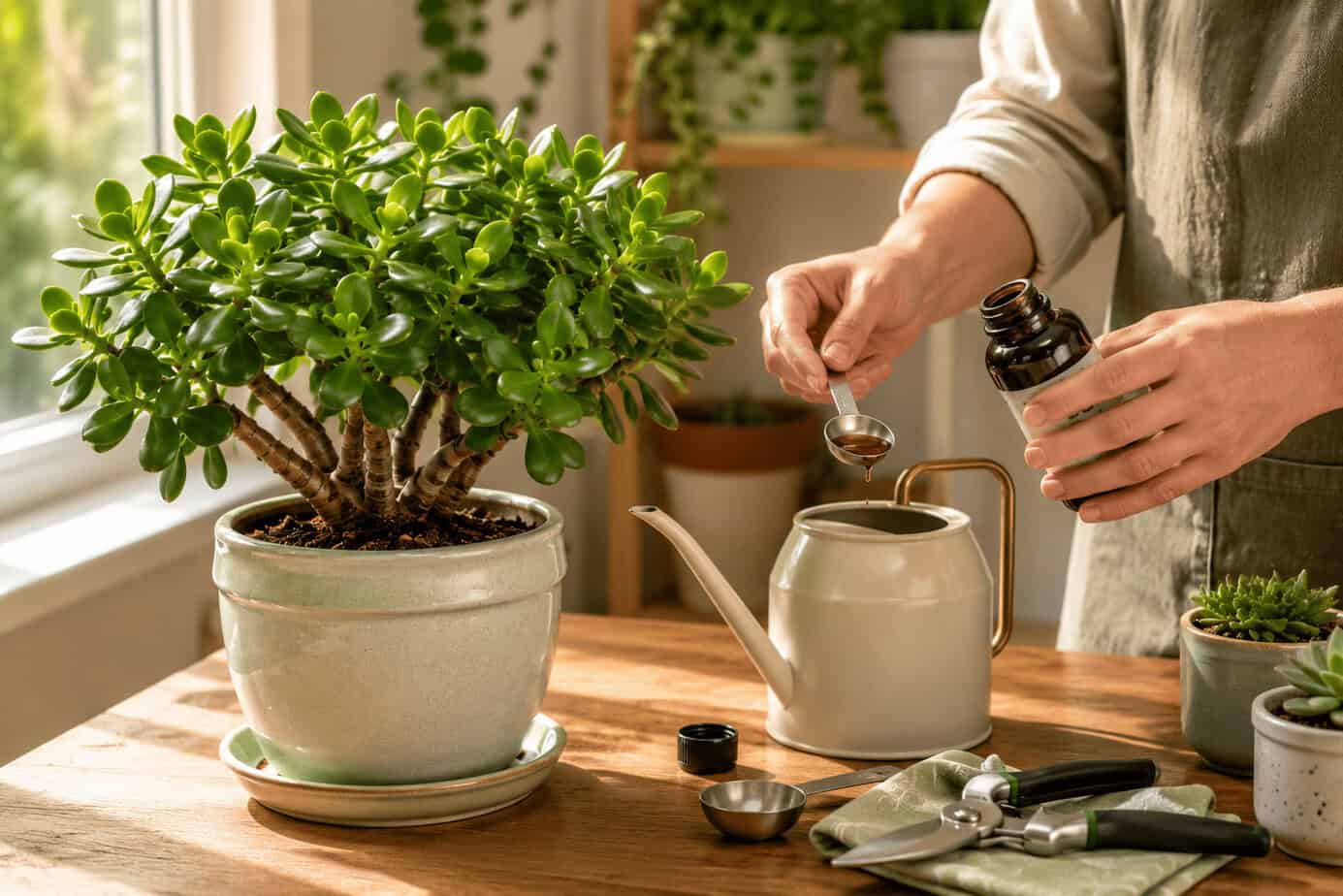
Jade plants don’t need heavy feeding, just light fertilization during their active growth phase. Feeding them every 4 to 6 weeks in spring and summer with a quarter to half-strength fertilizer usually does the trick, avoiding the risk of root burn.
Many plant owners mistake jade for tropical houseplants and overdo it. If you want your jade to grow strong and healthy, knowing when and how to feed it matters. Keep reading to find the best, safest way to nourish your jade plant without stressing it out.
Jade Plant Fertilizer Essentials
- Fertilize jade plants only during spring and summer using ¼–½ strength fertilizer every 4–6 weeks.
- The best fertilizer for jade plant care is either a balanced formula such as 10-10-10 or a succulent fertilizer with lower nitrogen.
- Overfertilizing causes more damage than underfeeding, including root burn, salt buildup, and leaf drop.
Do Jade Plants Really Need Fertilizer?
Jade plants aren’t hungry all the time. In fact, they often get by fine with minimal fertilizer, especially if repotted every 2 to 3 years. Many growers discover that fertilizing jade plant specimens too aggressively often produces weaker growth than a more restrained feeding schedule. These plants come from tough places where nutrients are scarce. They’ve learned to save water and food inside their thick leaves and stems, so they don’t ask much.
In talking with fellow succulent collectors, the consensus is clear: fresh substrate outperforms synthetic liquid food every time.
Repotting your jade into fresh, gritty soil every two years naturally replenishes trace minerals, which achieves a much sturdier structure than pushing rapid, bloated growth with heavy fertilizing Fertilizer should feel like an occasional boost, not a daily requirement.
Before rushing to fertilize, knowing your jade’s seasonal rhythm helps a lot.
When Should You Fertilize a Jade Plant?
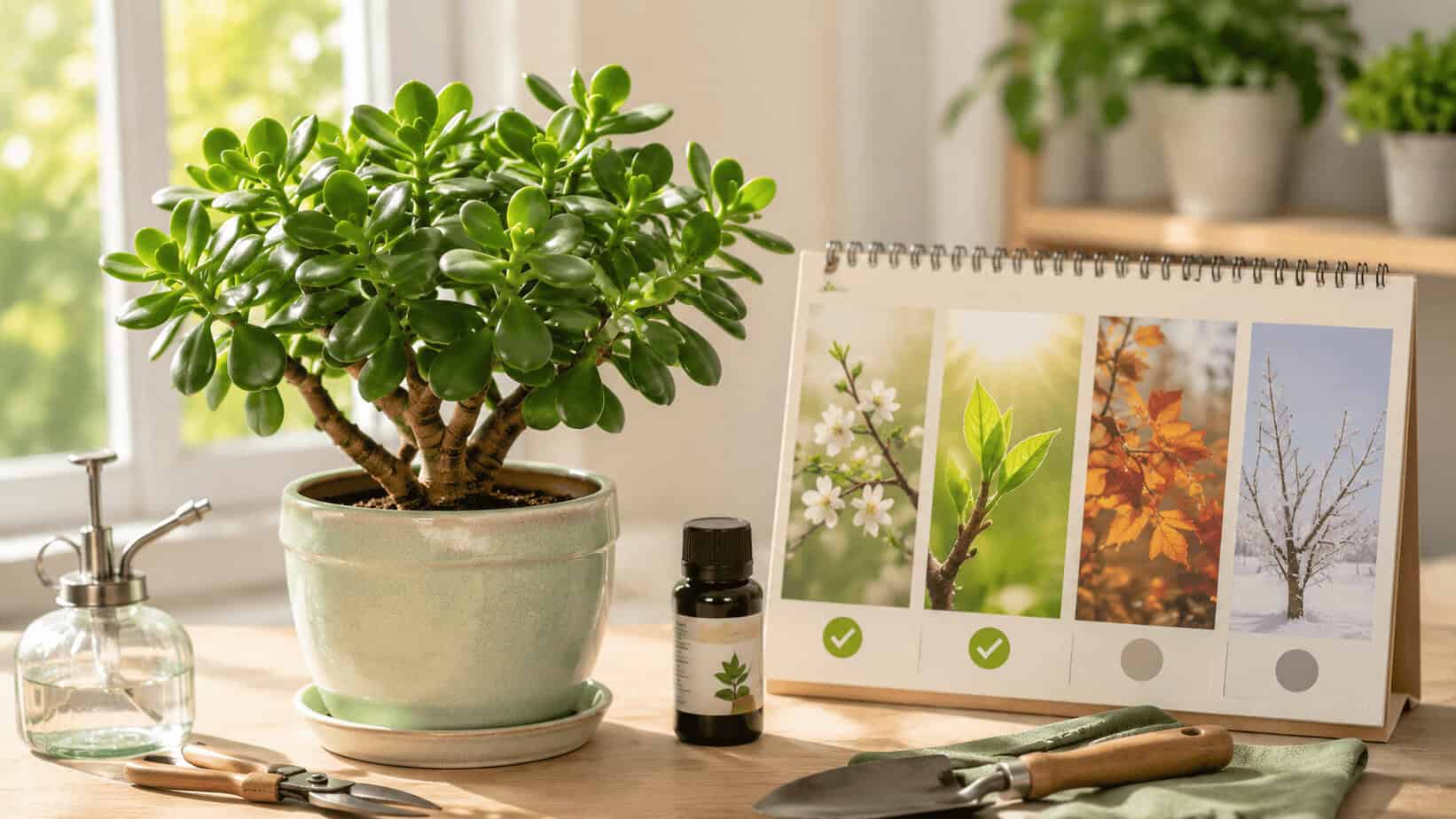
Only feed your jade during its active growing months, usually spring through late summer. From April to September, roots soak up nutrients and push new growth, according to succulent care experts.
Early Spring Feeding
Spring is your signal to start fertilizing.
- Wait until fresh growth shows up.
- Use fertilizer at a light dose, about a quarter to half strength.
- Don’t feed right after repotting; give roots time to settle.
Mid-Season Maintenance
Through late spring and summer, growth is lively.
- Feed every 4 to 6 weeks.
- Water as usual.
- Keep an eye on leaf color and plant energy.
As noted by University of Alaska Extension / houseplant411 fact sheet
“Feed with a fertilizer low in nitrogen every other month at ¼ the recommended strength when the plant is actively growing.” – University of Alaska Extension
Late Summer Final Feeding
Late summer might be your last chance for feeding before fall.
- If the plant is still growing, give one more light dose.
- As days shorten, cut back fertilizer.
- Avoid pushing soft, late-season shoots that won’t last winter.
Why Winter Feeding Is Discouraged
When autumn arrives, jade plants slow down.
- Nutrients build up in the soil.
- Salt from fertilizers can pile up.
- Roots become sensitive to damage.
Experts recommend stopping fertilizer in fall and winter. It respects the plant’s rest period and prevents stress.
Feeding timing matters, but what kind of fertilizer you use counts just as much.
What Is the Best Fertilizer for Jade Plants?
The top choice is a diluted balanced fertilizer or one made especially for succulents with lower nitrogen. Balanced mixes like 10-10-10 or 20-20-20 work if watered down enough to avoid damage. Some growers favor succulent blends with formulas like 2-7-7, which keep growth compact without encouraging floppy, weak stems.
Research from Journal of the American Society for Horticultural Science shows
“The optimum fertilizer rate with either weekly or daily watering was calculated as 100 ml of 250 ppm N of a 20N:8.6 P:16.6K fertilizer per 10 cm pot.” – Journal of the American Society for Horticultural Science
Here’s a quick look at fertilizer types jade growers mention a lot:
| Fertilizer Type | NPK Ratio | Best For | Notes |
| Balanced liquid | 10-10-10 | General growth | Dilute heavily |
| Balanced liquid | 20-20-20 | Mature plants | Use sparingly |
| Succulent fertilizer | 2-7-7 | Compact growth | Low nitrogen focus |
| Organic liquid feed | Varies | Gentle feeding | Slow nutrient release |
Popular products include:
- Miracle-Gro Succulent Plant Food
- Espoma Organic Cactus Plant Food
- Schultz Liquid Cactus Fertilizer
- Joyful Dirt Fertilizer
- Jack’s All Purpose Fertilizer
Too much nitrogen pushes jade towards lanky, weak limbs, definitely not what collectors want. Organic options like worm castings or fish emulsion provide a slower, gentler nutrient supply.
Controlled-release fertilizers offer a slow drip of nutrients which cuts down the risk of overfeeding.
At the end of the day, it’s less about the brand and more about how much and how often you feed. Too strong a mix, even if it’s great stuff, can scorch roots and set your plant back.
How Do You Fertilize a Jade Plant Step by Step?
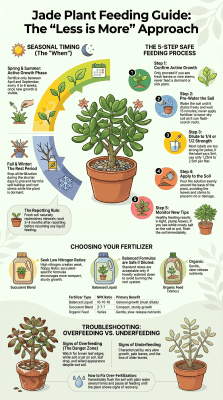
The best way to fertilize a jade plant is simple: water first, then feed, always using diluted fertilizer on soil that’s already moist.
Step 1: Confirm Active Growth
Look for fresh leaves or new stems. Feeding a dormant jade risks nutrient buildup and root stress, don’t rush it.
Step 2: Pre-Water the Soil
Pour plain water over the substrate until it drains freely from the bottom, then wait 15 minutes. In my collection, I look for the potting mix to turn a deep, uniform charcoal color and feel sponge-stiff. Applying liquid nutrients to bone-dry, hydrophobic peat will flash-scorch the root hairs; pre-moistening ensures the fertilizer distributes evenly rather than pooling in dry pockets.
Step 3: Mix Fertilizer at ¼–½ Strength
Fertilizer instructions usually aim at houseplants that grow faster. For jade, dial it back:
- Use a quarter-strength dose for caution.
- Half-strength if your plant is well established.
- Full strength only if the label insists.
So, if it says 5 ml per liter, try 1.25 to 2.5 ml instead. According to care data compiled by K-State Research and Extension, applying fertilizer at a reduced 25% to 50% strength safeguards the plant’s delicate root systems from chemical burns.
So, if it says 5 ml per liter, try 1.25 to 2.5 ml instead.
Step 4: Apply Evenly Around Roots
Pour the fertilizer solution onto the soil evenly around the roots.
- Don’t spray the leaves.
- Avoid wetting the stems heavily.
This helps roots get nutrients steadily without risk.
Step 5: Monitor Plant Response
Over the next three weeks, inspect the new growth points at the tips of the branches. Healthy feeding rewards you with pairs of leaves that emerge tight, plump, and sporting a distinct red or magenta margin if your lighting is right.
If you notice a chalky, white crystalline rim forming around the inside of your clay pot or on the top layer of perlite, your soil is retaining too much salt, flush it immediately.
Watering before and after feeding reduces fertilizer burns and salt problems, advises Houseplant411.
Good habits matter more than the exact fertilizer used.
Why Overfertilizing Causes More Problems Than Underfeeding
Overfertilizing burns your jade’s roots and leads to salt piling up in the soil. Underfeeding usually only slows growth.
Many jade issues blamed on “nutrient lack” actually stem from feeding too much.
| Overfeeding Signs | Underfeeding Signs |
| Brown leaf edges | Slow growth |
| White salt crust | Pale leaves |
| Leaves dropping | Less energy |
| Root damage | Older leaf loss |
Salt buildup makes roots thirsty, and plants may look wilted even if soil is wet. That white dust on soil? Usually salts, not bugs.
Quick guide: brown tips mean overfeeding; white crust means salt buildup; yellow leaves have many causes (not just fertilizer); leggy stems usually mean too little light.
How to Flush Excess Fertilizer From Soil
If you catch overfertilizing:
- Stop feeding right away.
- Flush soil with plain water several times.
- Make sure it drains well.
- Wait to feed again until the plant bounces back.
- Restart slowly at quarter strength.
Jades cope better with missing nutrients than with too many.
Can Fertilizer Fix a Weak or Sick Jade Plant?
No. Fertilizer won’t heal a struggling jade. Root damage makes nutrient uptake tricky and can worsen the problem.
Avoid feeding if your plant is recovering from:
- Root rot
- Pests
- Severe drought
- Recent repotting shock
- Overwatering
Healthy roots must come first.
Both research and experienced growers at Garden.org agree: fertilizer is a growth helper, not a cure. After repotting, wait 3 to 4 months before feeding. New soil usually has enough food, and roots need time to settle.
Once you see healthy new growth, you can start feeding again, slowly. If you’re trying to grow jade plant from a broken stem, avoiding fertilizer until roots are established can significantly improve success rates. This little distinction saves many jades from feeding mistakes.
Minimalist vs Regular Feeding: Which Approach Works Best?
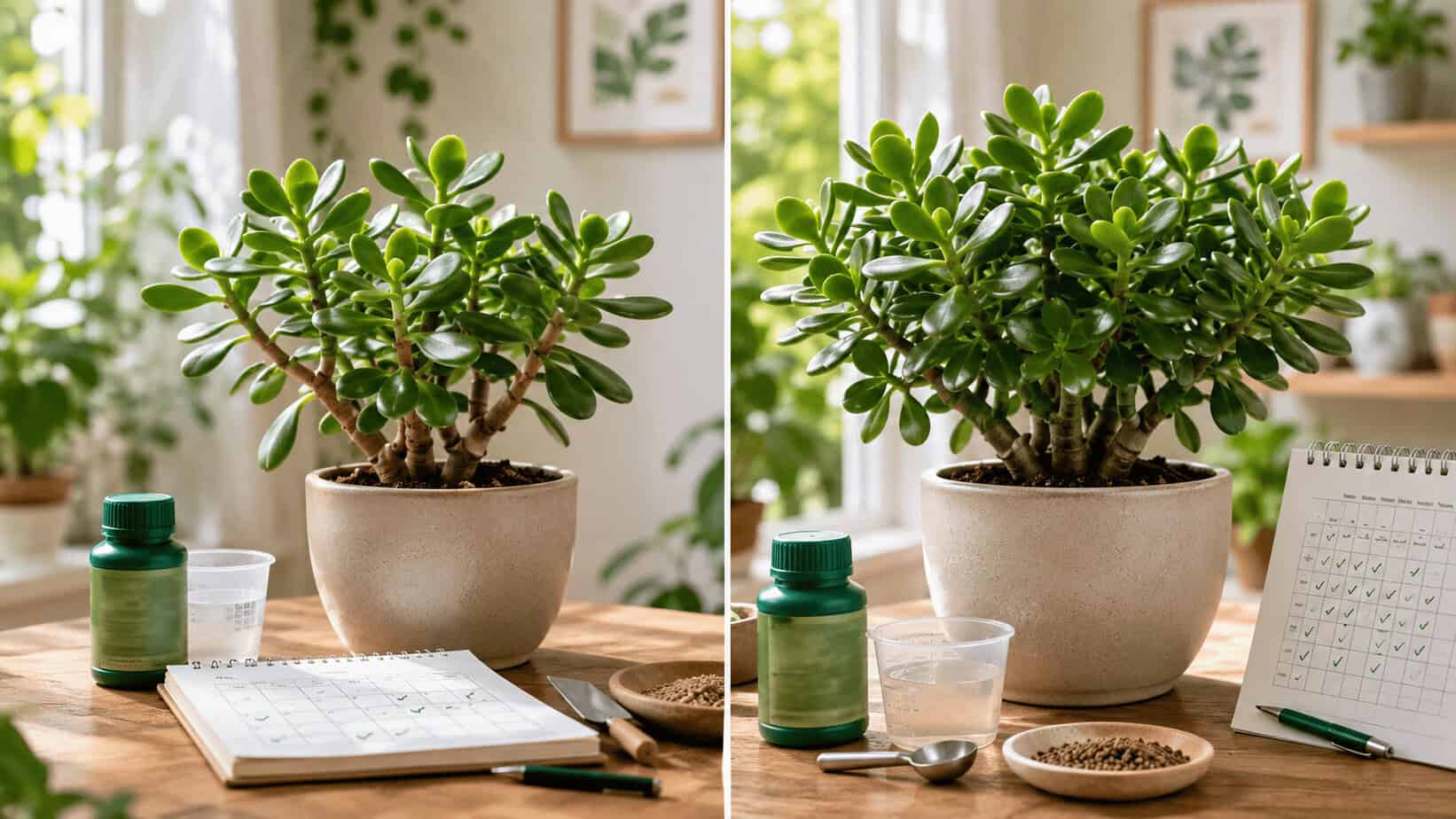
Both approaches can produce healthy jade plants, depending on the grower’s goals.
Many Reddit growers report fertilizing only 2–3 times per year, while others follow a structured every 4–6 weeks schedule throughout the growing season.
| Approach | Frequency | Best For |
| Minimalist | 2–3 times yearly | Low-maintenance growers |
| Regular feeding | Every 4–6 weeks | Faster growth goals |
The minimalist method emphasizes:
- Fresh soil
- Proper drainage
- Bright light
- Occasional feeding
Supporting this low-maintenance approach, the Penn State Extension explicitly states that growers should “apply fertilizer 2 to 3 times in the spring and summer to encourage growth” without pushing the plant into leggy, unstable development.
The regular feeding method emphasizes:
- Faster growth
- Larger foliage
- Consistent nutrient availability
- Structured seasonal care
Neither approach is inherently superior.
Growers seeking bonsai-style compact specimens often lean toward conservative feeding. Those pursuing rapid growth may prefer scheduled applications of diluted fertilizer.
The common thread is moderation. Both philosophies avoid heavy feeding and recognize the low nutrient requirements of Crassula ovata.
Choosing a strategy becomes easier once common mistakes are understood.
Jade Plant Fertilization Mistakes to Avoid
Credits: Plant Life with Ashley Anita
Most jade fertilizer problems come from poor timing, excessive strength, or ignoring environmental conditions.
Experts recommend nutrient ratios that emphasize moderation rather than aggressive feeding. Following that principle helps avoid several recurring mistakes.
Feeding During Winter
Dormant plants use very few nutrients.
Applying fertilizer during winter increases salt buildup without supporting meaningful growth.
Applying Fertilizer to Dry Soil
Dry roots are more vulnerable to fertilizer burn.
Always water before feeding.
Using Excessive Nitrogen
High-nitrogen fertilizers may encourage:
- Leggy growth
- Weak stems
- Large soft leaves
- Reduced structural strength
Low-nitrogen succulent fertilizer for jade plant care often promotes sturdier growth.
Ignoring Drainage and Light
Fertilizer cannot compensate for:
- Poor drainage
- Dense soil
- Insufficient sunlight
- Chronic overwatering
Proper jade plant care focuses on environmental conditions first, with fertilizer serving only as a supporting part of overall maintenance.
According to general horticultural guidance, environmental conditions remain the foundation of plant health. Fertilizer is only one part of the equation.
The strongest jade plants are usually grown in bright light, fast-draining soil, and a disciplined watering routine.
FAQ
How often should I fertilize jade plant during its growing season?
Fertilize a jade plant every 4–6 weeks during active growth in spring and summer using a diluted, balanced fertilizer. Reduce feeding to once every 2–3 months or stop during winter dormancy. Always apply fertilizer at half or quarter strength to avoid root burn, and follow a regular feeding schedule to maintain compact, healthy growth.
What type of fertilizer is best for jade plant in spring?
Choose a balanced, low-nitrogen fertilizer or a specialized succulent/cactus fertilizer for spring feeding.
Liquid, water‑soluble fertilizers at half strength provide fast, controllable nutrients, while slow‑release or granular fertilizers added to potting mix supply longer-term nutrients. Match fertilizer type and dosage to pot size and recent repotting to avoid overfertilizing.
How do I apply liquid fertilizer to an indoor jade plant?
Prepare liquid fertilizer at quarter or half strength according to the jade plant fertilizer dosage you use. Water the potting mix first, then pour the diluted fertilizer evenly to avoid concentrated roots. Allow excess to drain and never fertilize a newly planted or freshly repotted jade plant until roots re-establish, usually after several weeks.
Can overfertilizing cause white specks or yellow leaves on jade plant?
Yes. Excess fertilizer salts create white mineral deposits on the soil surface and cause yellowing leaves, stunted growth, or leaf drop. To correct this, flush the pot thoroughly with water to remove salts, reduce feeding frequency, and switch to a lower concentration or slow‑release option. Monitor recovery and adjust the feeding routine accordingly.
Is organic fertilizer safe for newly planted or bonsai jade plants?
Yes. Organic options like worm castings or compost tea release nutrients slowly and reduce burn risk, making them suitable for newly planted or bonsai jade plants when used sparingly. Mix small amounts into fresh soil or apply as a weak liquid feed. Avoid heavy applications until the root system is established and monitor growth before increasing dosage.
Keep Your Jade Plant Healthy for Years
Overfeeding is one of the easiest ways to slow down a jade plant. If you’re adding fertilizer too often or using too much, you can end up with weak growth and stressed roots. The fix is simple.
A steady feeding routine during the growing season helps support healthy development without extra work. Knowngarden recommends using a diluted fertilizer and focusing on the basics that matter most, like proper drainage and enough sunlight. With the right care, your jade plant can stay strong and attractive for many years.
Related Articles
- https://knowngarden.com/4-superb-guide-for-fertilizing-jade-plant/
- https://knowngarden.com/how-to-care-for-snake-plant-jade-2021/
- https://knowngarden.com/how-to-grow-jade-plant-from-a-broken-stem/
References
- https://www.harvey.k-state.edu/hort/archive/jade%20plants.pdf
- https://extension.psu.edu/jade-plant-a-no-fuss-houseplant